An order lands in our WMS in near-real time after your customer hits "buy." Shopify, Amazon Seller Central, TikTok Shop, BigCommerce, and any direct API integration push order webhooks that fire into Datex (our WMS of record). As a fallback the order API gets polled on a short interval, so a dropped webhook never strands an order on payment-gateway latency. Address validation runs against the USPS and Canada Post APIs and AVS fraud-score checks happen before the order enters the pick queue. Flagged addresses hold for a scrub window with a notification to your account manager.
Pick-priority queue assignment runs on cutoff time, carrier service level, and order weight class, not on order timestamp. A same-day promised order placed late in the morning does not sit behind a standard order placed early. The WMS ranks the queue and pushes the next pick to the floor associate's RF scanner. The associate walks to the bin location displayed on the scanner, scans the SKU at the bin to confirm the pick, and the WMS records the scan against the order in real time. Every pick is scan-confirmed. Visual picks do not happen at any Vertex facility, including for same-day rush lanes where it would be faster.
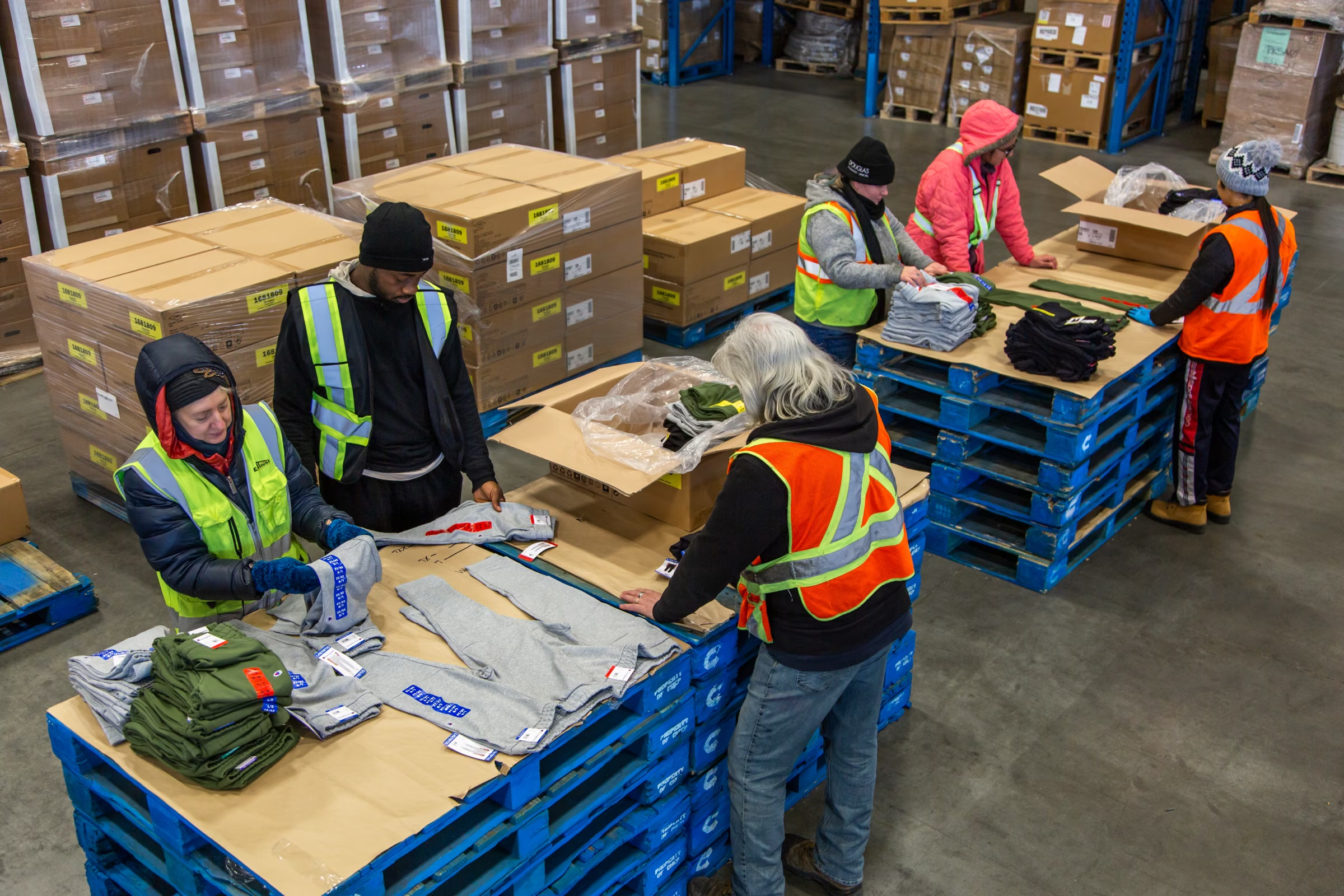
Pack-station QC runs a weight-check against the expected weight (calculated from the SKU dimensions and weights in your catalog) before the parcel ships. If the actual weight differs from expected, the pack station pauses and the supervisor reviews. This catches missing-item and wrong-item errors that slipped past pick confirmation. For higher-value orders the pack station also captures a photo of the open parcel before sealing, which the customer-service team can pull if there is a delivery dispute. Brand-spec packout (insert orientation, tissue color, thank-you card, void-fill choice) gets photographed and approved during onboarding, and the pack station references the spec so packout does not drift.
Multi-carrier rate-shop runs via EasyPost against UPS, FedEx, USPS, Purolator, Canada Post, and DHL, plus any negotiated account you bring. The default rule is cheapest acceptable service within carrier rules, with overrides for promised-by dates and higher-value orders that get faster service. Labels print at the pack station promptly after rate-shop completion. Single-carrier locks do not happen at Vertex; brands overpay on the long tail when their 3PL routes every parcel through one carrier regardless of whether another carrier would be meaningfully cheaper.
Manifest queue and cutoff hold are run by the shipping lead, not a script. Carrier cutoffs are scoped per origin node and published in your onboarding doc. Vancouver HQ runs to a 12 PM PT same-shift cutoff. Orders packed by cutoff make the same-shift truck. Orders that miss cutoff roll to next-day with an automated customer-service notification to your support inbox so your team is not surprised. Dock seal capture, BOL exchange, and trailer handoff happen with the dock manager present and the seal number photographed and logged against the manifest. The dock manager owns the cutoff as a hard line.
After the parcel leaves our dock, the carrier-handoff timeliness checkpoint watches for first-scan latency. If a parcel does not get its first carrier scan inside the threshold, the exception desk gets a yellow flag and chases the carrier ops contact. The customer never has to ask "why does my tracking still say label created"; we catch the scan gap before your support inbox does. Delivery confirmations and exception flags (refused, undeliverable, lost-in-transit) land in the exception desk queue, which is reviewed on a regular cadence including weekends. Your customer-service team gets the resolution path before the customer notices.