


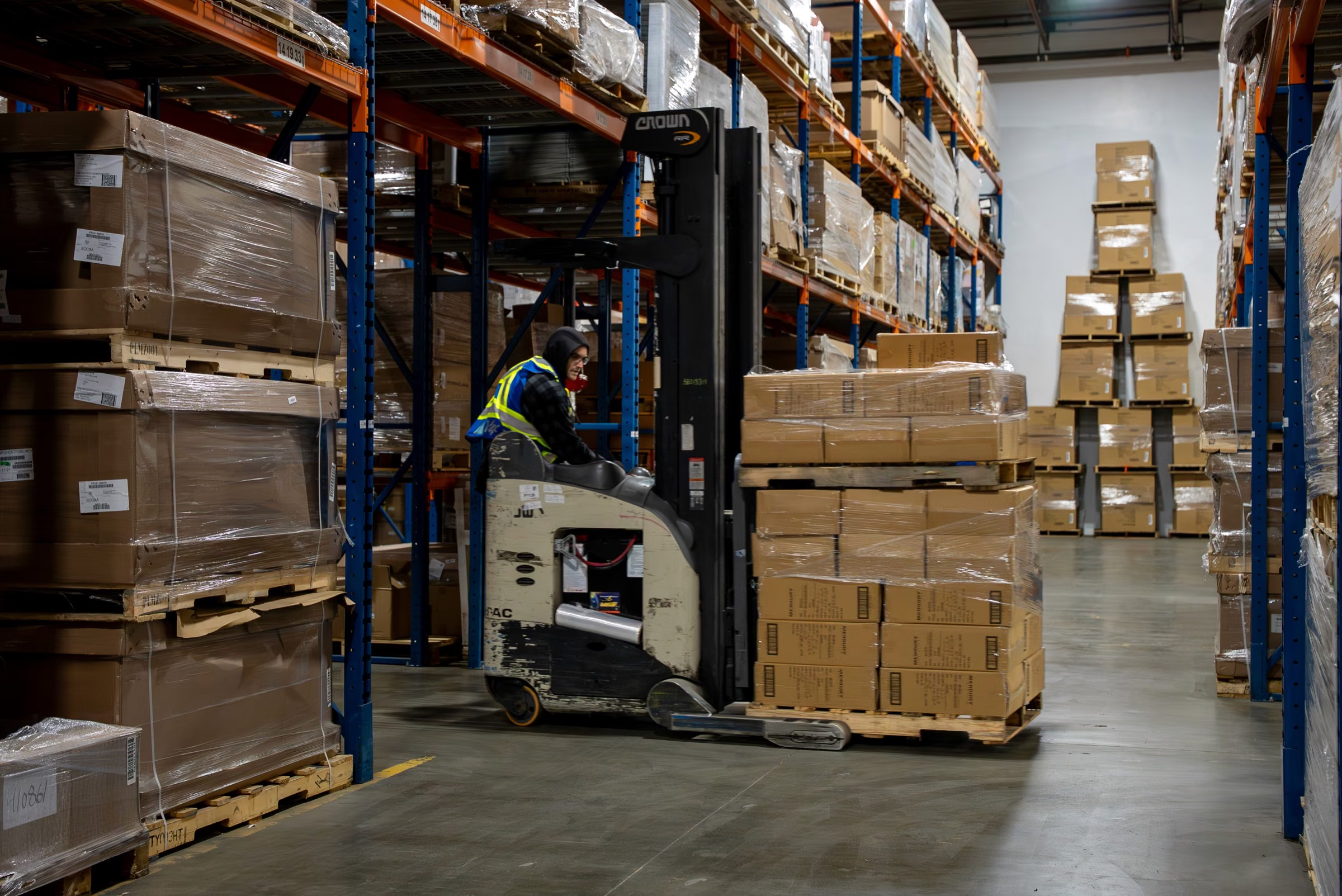
Outbound LTL to retail DCs
Retailer-bound freight to Saks, Nordstrom, REI, Target, Walmart, and the rest of the retail panel. Appointment booking, routing-guide enforcement, BOL accuracy, and ASN coordination all from the same desk.
Live LTL rate-shop across our carrier panel. Density and NMFC code measured at our dock so reclass disputes don't surprise you three weeks later.
Why LTL exists as a discipline
LTL pricing turns on freight class, and freight class turns on density (pounds per cubic foot). The math is unforgiving: a Class 70 pallet that gets reclassed to Class 100 at the carrier terminal costs meaningfully more, and the reclass invoice lands weeks after the load already delivered. Most 3PLs estimate class at booking based on a one-line BOL description and let the carrier reclass downstream. That is how brands end up with LTL spend that drifts up every quarter for reasons nobody can audit.
We measure density at our dock. Every pallet gets weighed, dimensioned, and NMFC-coded at receipt. The class is locked in before the carrier ever sees the BOL. Reclass exposure drops to near zero, the rate the freight desk quotes is the rate that actually lands on the invoice, and your CFO stops asking what changed in freight costs this quarter.
This page walks the four LTL workflows we cover, the honest "when LTL wins" decision logic, the full LTL carrier panel, the four class-rate gotchas that destroy unmanaged LTL programs, the weight + dim slider that shows class and estimated cost in real time, and the pricing structure. The math will tell you when LTL is the right tool and when ground parcel or TL would be cheaper.
What LTL shipping covers
Inbound from suppliers, outbound to retailer DCs, node-to-node transfers, and B2B wholesale all run through the same LTL desk. The carrier mix and accessorial profile changes per workflow but the operational model stays consistent.
Retailer-bound freight to Saks, Nordstrom, REI, Target, Walmart, and the rest of the retail panel. Appointment booking, routing-guide enforcement, BOL accuracy, and ASN coordination all from the same desk.
Inbound from your manufacturer, contract packer, or freight forwarder into our nodes. We book the dock appointment, scan-confirm at receipt, and put away to bin on a published receipt-to-pickable SLA.
Multi-node brands move inventory between our facilities on LTL when the volume does not justify TL. We coordinate the transfer, track in transit, and update WMS bin locations on receipt at the destination node.
Wholesale orders to small retailers, distributor channels, and B2B accounts that do not have full-pallet velocity. LTL minimums apply; we will tell you when ground parcel is cheaper for the load profile.
When LTL beats parcel
Most brands have a slice of their volume sitting in the gray zone between parcel and LTL. The four thresholds below cover most of that decision space. When more than one threshold applies, LTL almost always wins.
The 60-lb mark is roughly where parcel dim-weight surcharges and handling fees start stacking against LTL minimums. UPS Ground over 70 lbs requires an additional handling fee per package. FedEx Ground over 70 lbs requires the AHS surcharge plus dim-weight. By 100 lbs in a single package, LTL is almost always cheaper.
Rule of thumb: under 60 lbs ground parcel; 60 to 150 lbs run both quotes; over 150 lbs LTL almost always wins
A standard 40x48 pallet is roughly 75 ft³ at 60-inch stack height. Two pallets is 150 ft³. Three pallets crosses the 200 ft³ threshold where splitting into multi-parcel ground starts costing 3 to 5x the LTL rate. Volume matters more than weight on dim-driven SKU profiles (apparel, soft goods, oversized packaging).
Rule of thumb: 2 pallets and up shifts to LTL; 1 pallet equivalent run both quotes
Most major retailer DCs (Saks, Nordstrom, Target, Walmart, REI) flatly reject small-parcel deliveries to their inbound docks. Appointment-only LTL receiving is the standard channel. If you ship a 50-lb package via UPS Ground to a Walmart DC, the trailer driver gets refused at the gate and the package returns at your cost.
Rule of thumb: any retailer DC ships LTL or palletized truckload, no exceptions
Glass, ceramics, electronics, fitness equipment, and high-AOV beauty kits all see damage rates 4 to 8x higher on small-parcel ground vs palletized LTL. The freight handling on LTL (forklift load, stretch wrap, sealed trailer) reduces damage by an order of magnitude. The damage claim math alone justifies LTL on most fragile high-AOV SKUs.
Rule of thumb: fragile + AOV over $400 + over 30 lbs almost always LTL
Full LTL carrier panel
Three tiers of LTL carriers: nationals for standard coverage, regional specialists for density on specific corridors, and Canadian + cross-border carriers for lanes that cross the border.
National LTL carriers
National carriers we rate-shop on every standard LTL load. Each one has different lane strengths; the rate-shop engine picks the cheapest carrier that hits the transit SLA on the specific lane.
Regional density specialists
Regional carriers with deep density on specific corridors. Often meaningfully cheaper than nationals on their home lanes. The rate-shop engine includes them on every quote so the cheapest legitimate option wins.
Canadian + cross-border LTL
Canadian-domestic and US-Canada cross-border LTL runs on a different carrier panel. CUSMA paperwork through partner customs brokers; we coordinate but do not certify origin ourselves.
Class rate gotchas
The four gotchas below cover most of the LTL margin leakage we see when we audit incoming customer freight programs. Each one is fixable but only at the dock; once the load leaves with bad data, the carrier owns the margin recovery.
Freight class is set by density (pounds per cubic foot). Most 3PLs estimate class at booking based on the BOL description. We measure pallet dimensions and weight at receipt so the class is locked in before the truck leaves. A Class 70 estimate that gets reclassed to Class 100 at the carrier terminal is a material rate increase that lands on your invoice weeks later.
Every commodity has an NMFC (National Motor Freight Classification) code. Wrong NMFC code triggers a reclass; vague NMFC code triggers a "subject to inspection" clause that the carrier uses to bill at the highest class. We maintain the NMFC code library per SKU at receipt so the BOL is right the first time.
A 40x48 pallet stacked to 48 inches is 64 ft³. Stack the same load to 72 inches and the density per cubic foot drops, the class goes up, and the rate jumps. We coach pack-out spec to optimize stack height against density rather than just packing tall to fit the trailer.
Liftgate delivery, inside delivery, residential delivery, limited-access pickup, appointment-only delivery, notification-prior-to-delivery: every accessorial adds $30 to $150 on top of the base LTL rate. We surface every accessorial on the quote so the all-in cost is visible at booking, not on the invoice three weeks later.
LTL class + cost slider
Pick a weight and volume profile to see the freight class, the estimated rate range on a typical 800-mile lane, and what mode (parcel, LTL, or TL) makes sense. The math is indicative; live quotes against the carrier panel happen on the freight desk.
Pick a weight + volume profile
Click any of the eight profiles above to see the freight class, indicative rate, and recommended mode.
LTL pricing
LTL rates are pass-through against the carrier panel. We do not clip margin on the freight rate. Density measurement, NMFC accuracy, BOL preparation, and appointment booking are all included in your operations fee.
| Service | Indicative pricing | Notes |
|---|---|---|
| LTL freight quotes | by lane | Live rate-shop across the LTL carrier panel per shipment |
| Per-pallet receiving (inbound LTL) | Custom | Standard 40x48 pallet, palletized inbound from supplier or freight forwarder |
| Density measurement + NMFC code | included | Class accuracy on every pallet, no reclass surprises |
| BOL preparation + appointment booking | included | Carrier dispatch + receiver appointment all from our desk |
| Liftgate / inside delivery accessorial | Pass-through | Carrier surcharge per shipment, surfaced at quote time |
| Residential LTL delivery accessorial | Pass-through | Carrier surcharge for non-commercial destinations |
| Detention / wait time at receiver | pass-through | Carrier charges $50 to $150 per hour beyond the appointment window |
Ready to fix the LTL program?
Live rate-shop across our LTL carrier panel. Density measurement and NMFC accuracy on every pallet. Reclass exposure near zero. No margin clip on the freight rate.